
Kai Rosso
Before I pour.
You must be of legal drinking age to enter. Please confirm your date of birth.
Please enjoy Kai Rosso responsibly.
You must be of legal drinking age to enter. Please confirm your date of birth.
Please enjoy Kai Rosso responsibly.

Count Camillo Negroni walks into Caffè Casoni and orders an Americano with gin instead of soda. The bartender doesn't blink. The drink is born.
Gin, Campari, sweet vermouth. The drink's whole personality is its symmetry. No part louder than another. No version sweeter than itself.
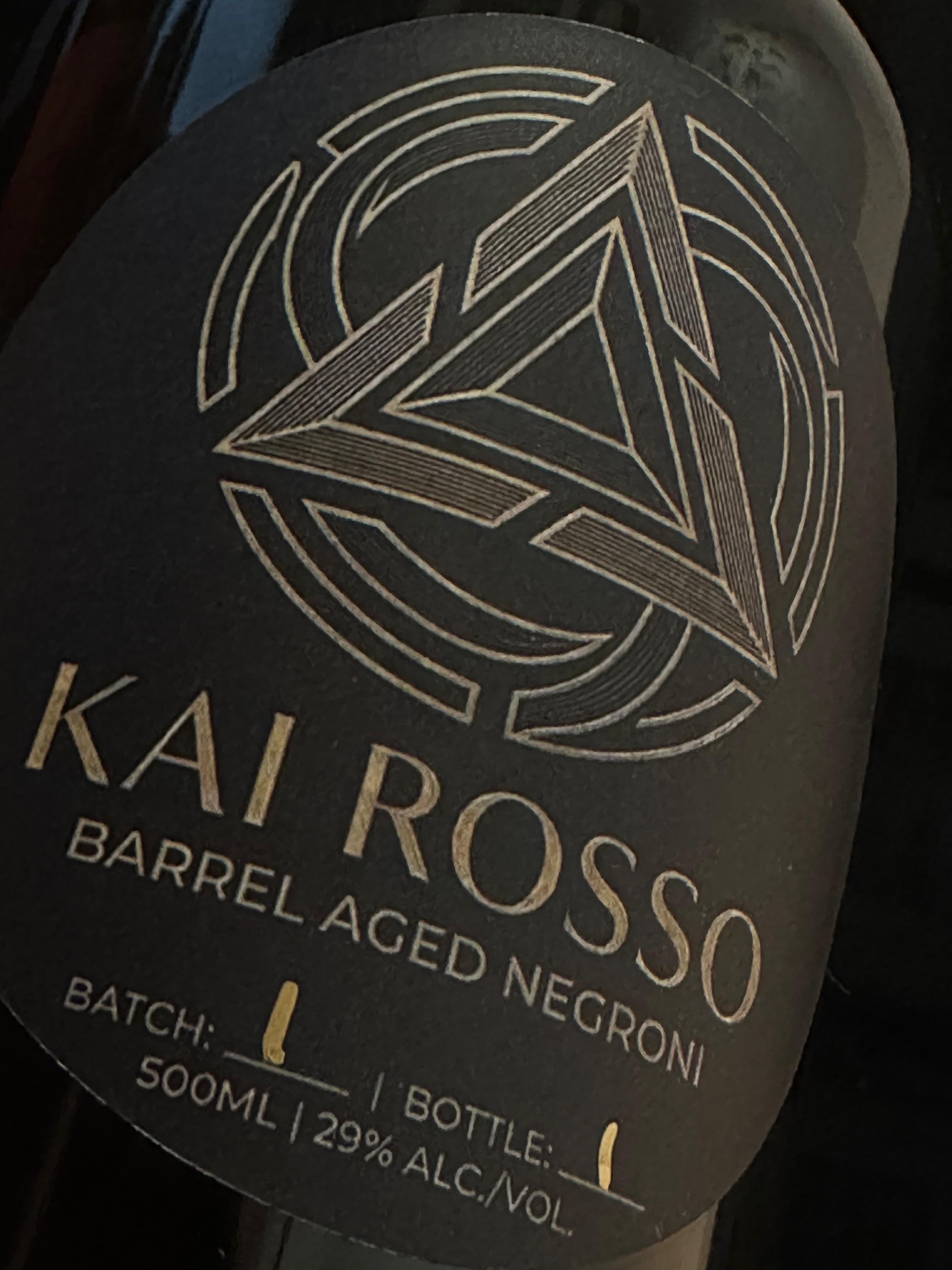
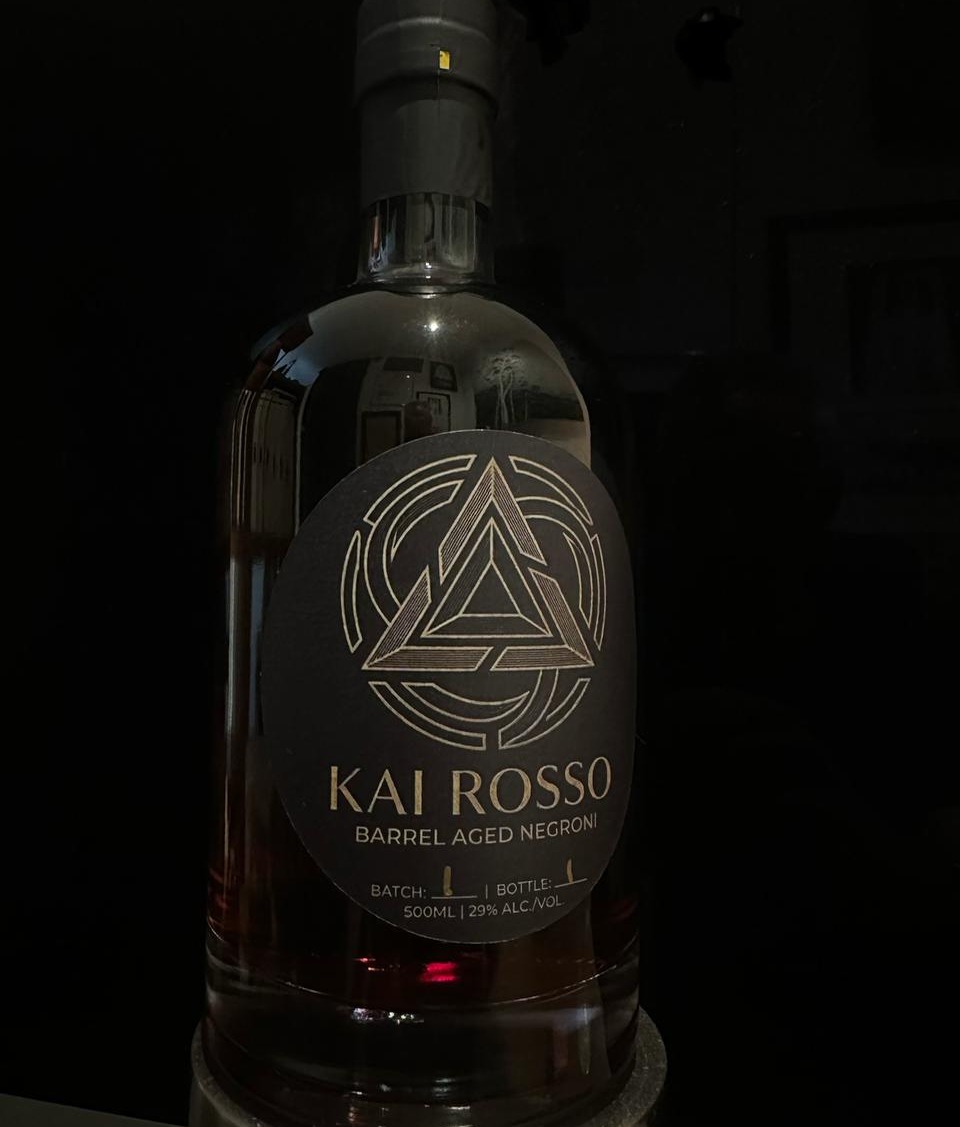
Charred with fire on the inside, rested in oak for exactly the right amount of time to bring the flavors together and create the unmistakable depth. What you pour is what you drink. It's not a mixer. Nothing intervenes.
A gin chosen for the Negroni, not for the Martini. Deep. It steers the other two.
The bitter and the colour (which used to come from insects — long story). The reason a Negroni looks like nothing else.
Intense and untamed when you start. Two weeks in oak finds its window of balance. When bottled, it has agreed with the other two.
Mixed. Rested. Bottled. Numbered.
"Time in the barrel does what no ingredient can."
— A customer who is a connoisseur of Negronis globally

Ready to serve as it is, Kai Rosso is best poured over a single large ice cube in a heavy rocks glass. Finish with a twist of orange, expressed over the rim, then drop it in.
Enjoy it slowly. Time in oak has already done all the work, and the rest is simply in the smoothness of the pour and pace of the enjoyment.
Best enjoyed without haste, and even better in good company.

Two weeks in oak. One pour at a time.